
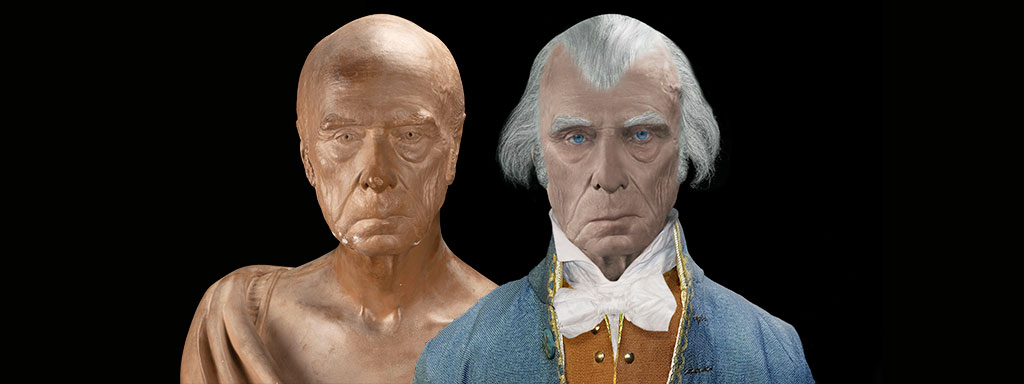
The Real Face of James Madison
Life Mask Reconstruction
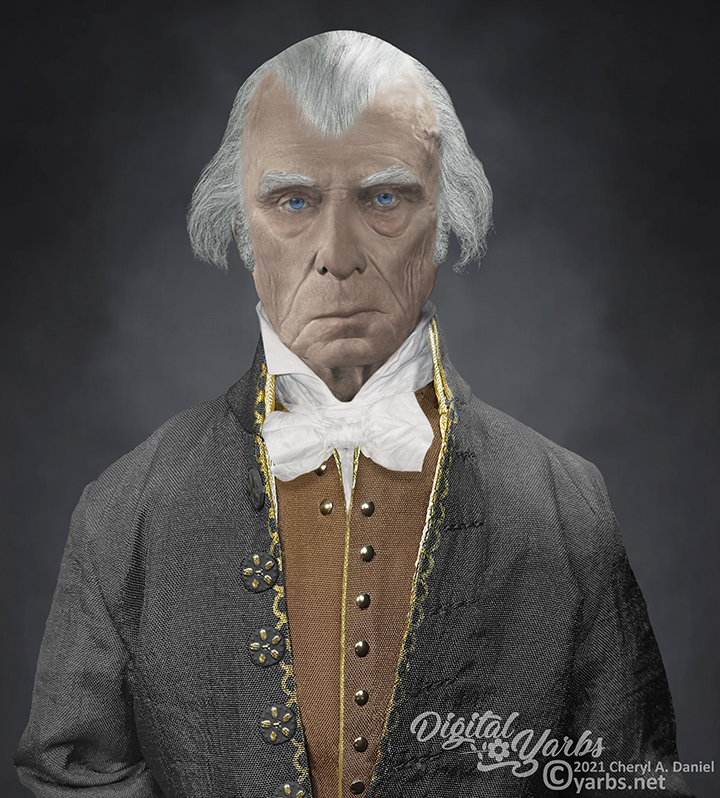
When sculptor John Henri Isaac Browere sought to create life masks of James and Dolley Madison in 1825, he came with an impressive recommendation from General Jacob Brown, who had already sat for Browere twice. Writing to Madison, Brown praised the artist as "a gentleman and a scholar" and expressed his confidence in Browere's ability to produce faithful likenesses from life. Brown admitted that he had "long been desirous to obtain a perfect one" of his friend James Madison and hoped Browere's work would finally provide "a faithful facsimile of my esteemed friend ex-President Madison."¹
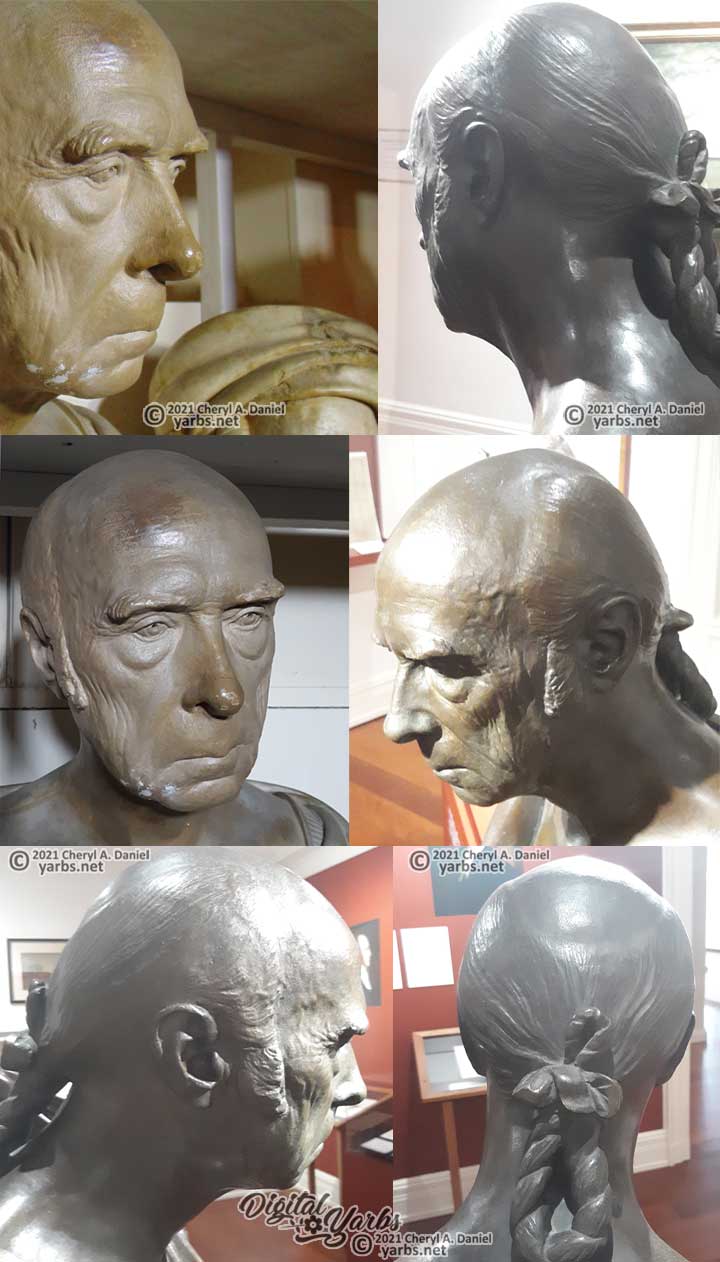
Browere's introduction led to a warm friendship with James and Dolley Madison. According to Browere's account, the Madisons took more than an ordinary interest in both the artist and his family. Their friendship became so close that, with Dolley Madison's permission, Browere's daughter, born on July 3, 1826, was named in her honor. Years later, the child accompanied her parents on an extended visit to Montpelier.
Most significant of all, James Madison himself endorsed the accuracy of Browere's work. On October 19, 1825, he signed the following certificate:
"Per request of Mr. Browere, busts of myself and of my wife, regarded as exact likenesses, have been executed by him in plaister, being casts made from the moulds formed on our persons, of which this certificate is given under my hand at Montpelier, 19, October, 1825."
— James Madison, Montpelier, 1825
Few historical figures left behind such a direct endorsement of the accuracy of their own likeness. Madison's statement makes Browere's life mask one of the most trustworthy references available for understanding his appearance.
Using Madison's life mask as the primary reference, together with historical descriptions and Adobe Photoshop, I have attempted to recreate what James Madison may have looked like in 1825, complete with his blue eyes, bushy eyebrows, and distinctive widow's peak comb-over.
What Did James Madison Look Like?
Visitors who met Madison during his later years described a man whose mind remained remarkably sharp. In 1828, one observer wrote that his conversation was "a stream of history... so rich in sentiments and facts, so enlivened by anecdotes and epigrammatic remarks, so frank and confidential as to opinions on men and measures, that it had an interest and charm which the conversation of few men now living could have." Physically, Madison's "little blue eyes sparkled like stars from under his bushy grey eyebrows and amidst the deep wrinkles of his poor thin face." With age, his complexion had become yellowish, and his eyes showed signs of puffiness.³

Browere's reputation for realism made these life masks especially valuable. His work "achieved a stark realism uncommon in that day." Rather than idealizing his subjects, Browere faithfully recorded age-lined brows, pockmarked faces, and other natural features. His life masks remain among the most authentic likenesses of several important historical figures who lived before photography.⁴
Not everyone viewed Madison favorably. Novelist Washington Irving famously described him as "but a withered little apple-John," while one congressional wife dismissed him as a "gloomy, stiff creature... who has nothing engaging or even bearable in his manners—the most unsociable creature in existence."⁵ His official portraits reinforce this impression, presenting a serious statesman who "gazes levelly out of the canvas, virtually daring the viewer to try to make him crack a grin."⁶

Those who actually knew James Madison, however, painted a very different picture.
One dinner guest recalled that after meals Madison enjoyed serving different vintages "of no mean quality" while entertaining friends with a steady stream of stories and anecdotes.⁷ Friends relished his wicked sense of humor. One niece remembered that his conversation moved "from brilliant mirth through to brilliant mirth." A British diplomat described him as "a jovial and good-humored companion," while another contemporary called Madison "an incessant humorist" who "set his table guests daily into roars of laughter over his stories and whimsical ways of telling them."⁸
He was even known to tell—and appreciate—the occasional off-color joke, revealing a warm, playful personality that contrasts sharply with the stern, reserved image presented in many of his official portraits.
The Lost Daguerreotype Photograph of James and Dolley Madison
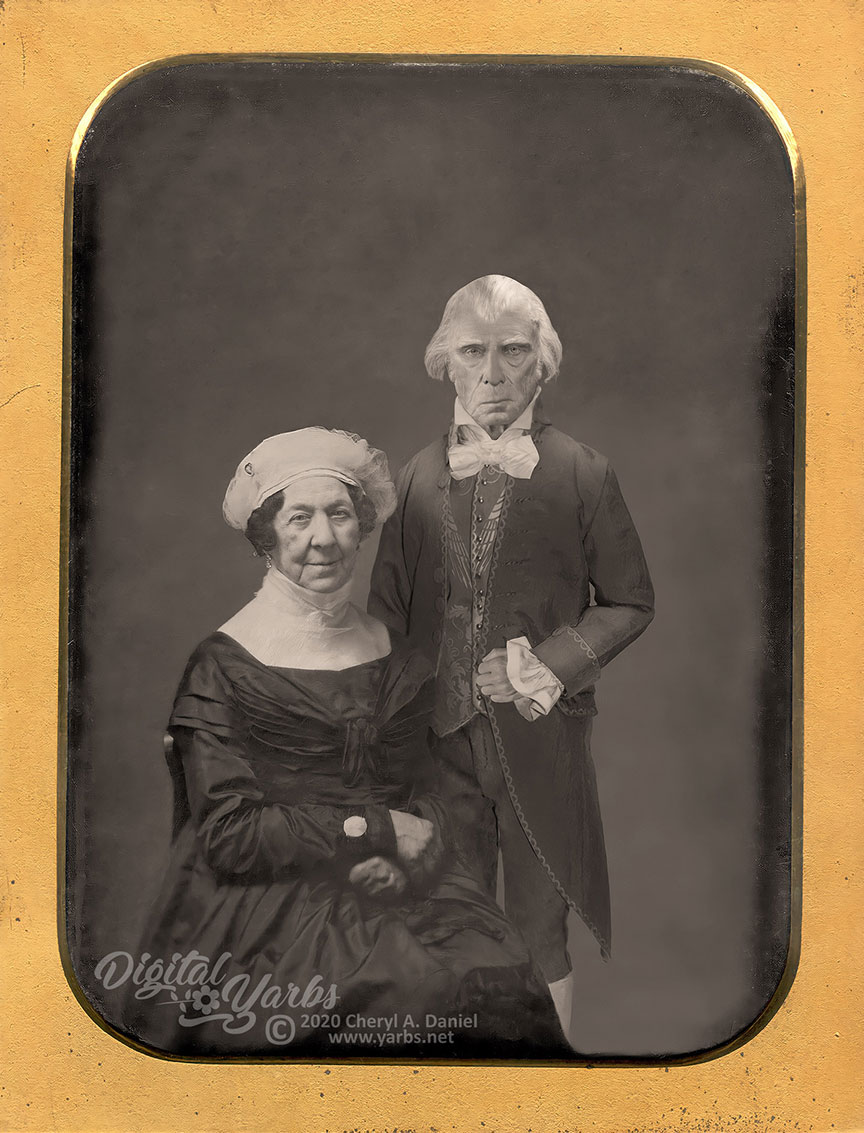
History is filled with moments we know occurred but can never witness because no visual record survives. Such is the case with President James Madison and his wife, Dolley Madison. Their affectionate marriage is well documented through letters, diaries, and the recollections of those who knew them, yet no painting depicts the couple together, and James Madison died in 1836—three years before the invention of practical photography. As a result, no authentic photograph of America's fourth president with the nation's celebrated First Lady can ever exist.
This reconstruction offers a historically informed visualization of what such a photograph might have looked like. Unlike James, Dolley Madison lived into the age of photography, leaving behind several daguerreotypes from her later years. The foundation of this reconstruction is a high-resolution scan of an 1848 daguerreotype of Dolley Madison with her niece, Anna Payne. After digitally restoring the original photograph and removing Anna Payne, I reconstructed James Madison using the facial structure preserved in his 1825 life mask created by sculptor John Henri Isaac Browere. Historical research into period clothing, posture, lighting, and nineteenth-century portrait conventions, together with carefully constructed digital elements, were then combined to create the final composition.
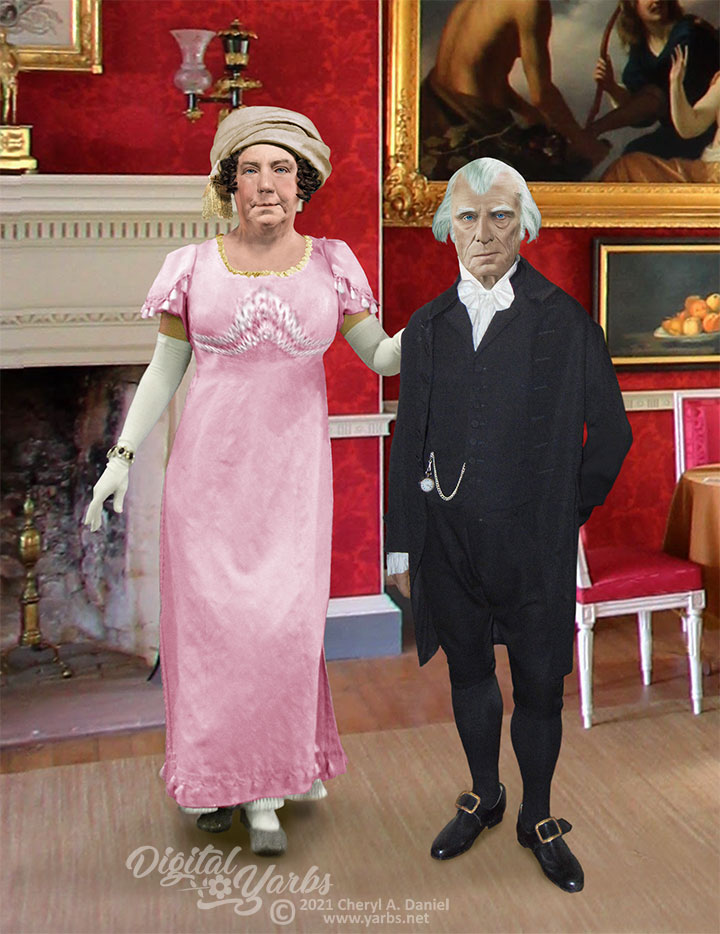
Like all historical reconstructions, this image contains unavoidable anachronisms. James Madison's life mask records his appearance at age seventy-four in 1825, while the daguerreotype of Dolley Madison was taken in 1848 when she was eighty years old. Consequently, Dolley appears several years older than James in this reconstruction, even though James was actually seventeen years her senior. Despite this chronological inconsistency, the image provides a historically grounded visualization of one of America's most remarkable presidential couples together in a photograph—a scene history never had the opportunity to record.
Historical Sources and References
1,2 Charles Henry Hart. “The Project Gutenberg EBook of Browere’s Life Masks of Great Americans” https://www.gutenberg.org/files/51890/51890-h/51890-h.htm3 Doctor Zebra. “Health and Medical History of President James Madison” http://www.doctorzebra.com/prez/g04.htm
4 Donald B. Webster, Jr. “The Day Jefferson Got Plastered” American Heritage (1963) https://www.americanheritage.com/day-jefferson-got-plastered
5,6,7,8 David O. Stewart. “The Surprising Raucous Home Life of the Madisons" https://www.smithsonianmag.com/history/surprising-raucous-home-life-madisons-180954205/
Digital Yarbs Complete Works
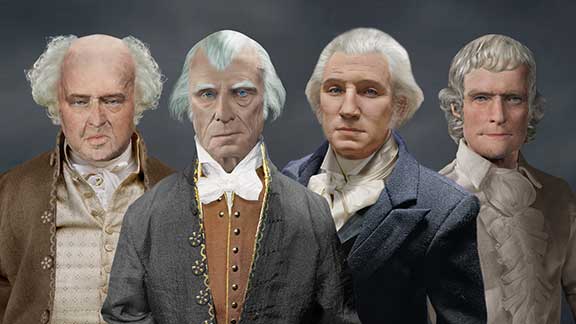
Life Mask Facial Reconstructions of History
Witness the authentic faces of historical figures reconstructed with the remarkable capabilities of Photoshop, utilizing actual plaster life mask castings of their heads and upper torsos.

Colorizations and Enhancements
Utilizing the powerful tools of Adobe Photoshop and AI, I breathe new life into vintage photographs and daguerreotypes by colorizing, enhancing, de-aging, and occasionally reconstructing them.

Free Image Downloads
Tired of AI-generated historical figures that don’t actually resemble the real people? Free historically accurate images for you to use!
Latest Digital Yarbs Video
Click that red subscribe button to stay up to date with my latest content.