

Jackson Chaney Colorized and Enhanced Portraits
Jackson Chaney – A More Accurate Historical Portrait
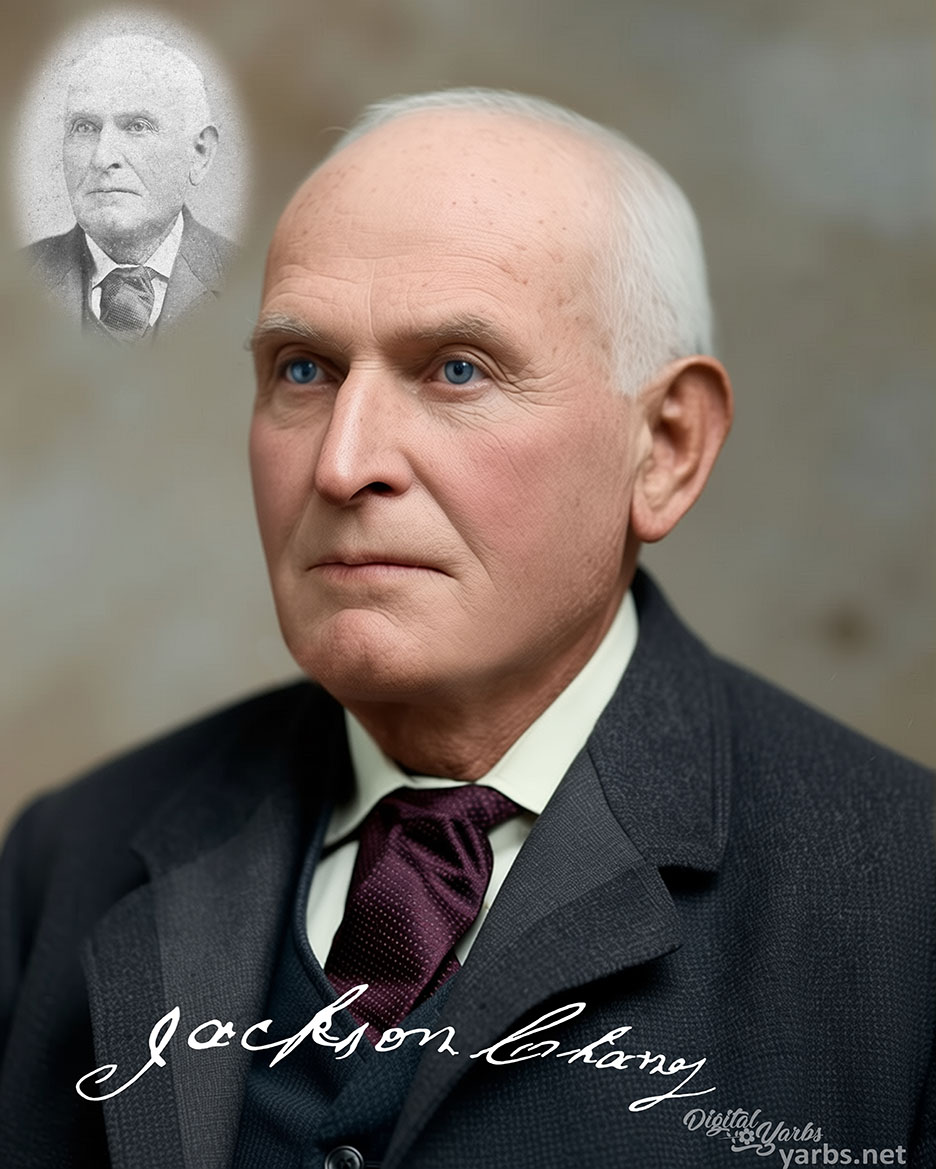
This enhanced portrait reconstruction of Jackson Chaney attempts to show he may have looked like with modern photographic clarity.
Are you looking for images of historical figures who actually look like themselves? Many modern “historical portraits” online are purely AI-generated and often produce a generic face that does not match the real person. Digital Yarbs creates historically grounded portraits based on real source material, including original photographs and period references, with a focus on preserving each figure’s authentic likeness.
This page features a Photoshop and AI enhancement of Jackson Chaney. My goal is not to create “AI slop,” but to restore and present historical imagery in a way that looks natural, respectful, and true to the historical record — as if the photograph were taken with modern clarity.
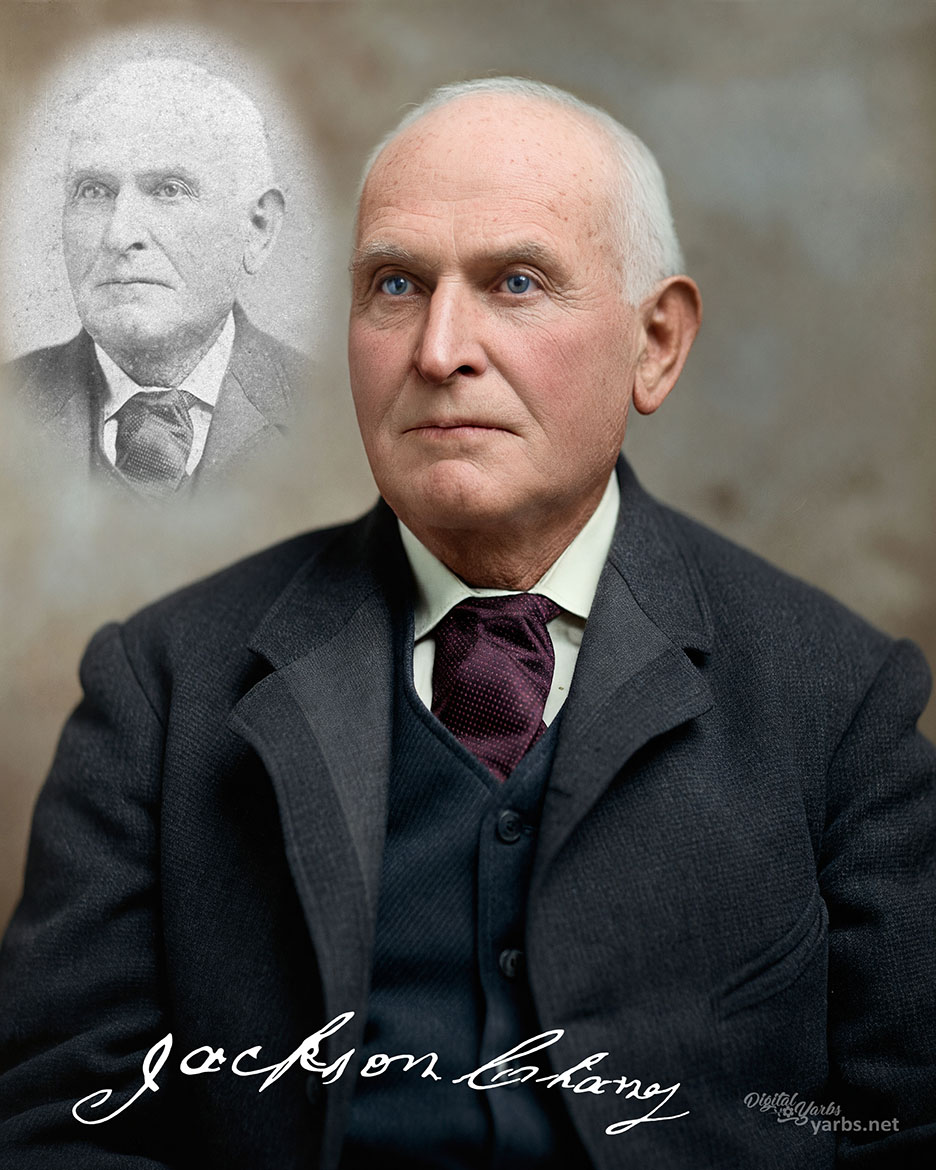
About Jackson Chaney
Jackson Chaney was born on July 16, 1817, in Pittsylvania County, Virginia, the son of Moses and Sarah Haley Chaney. He married Ann Milam of Halifax County, Virginia. They had nine children. Jackson died on February 15, 1894 at his home in Laurel Grove, Pittsylvania County, Virginia.
According to the 1907 writings of Henry Watson Chaney, "Jackson was a farmer by occupation. He lived to be a very old man and died on the place owned by him at the time of his death, which is two and one-half miles southeast of Laurel Grove, Pittsylvania County, Virginia. Jackson never united to any church, though his sentiments were with the Old Primitive Baptists. The writer of this has often seen him at Old Mill Meeting House."
Obituary from Zion's Landmark 1894
You by request will please publish in Zion's Landmark, the death of our kind old friend Mr. Jackson Chaney, who died at his home near Laurel Grove in the Co. He was born July 16th, 1817, and departed this life Feb.15th 1894. He never joined any church or organization of men, told me he was not fit to be a member of the church, and had no use for institutions of men; also he told me he had a hope for a good many years. All who knew him could but admire him as a good man. He was so quiet, you remember brother Gold, you asked him once if he ever got mad. He was a good neighbor and kind father. He left eight children, seven daughters and one son to mourn his loss, also a goodly number of grand children; but their loss is his eternal gain I believe.
Fear not children, he is at home
Where you shortly hope to go,
When you reach that happy shore
All your sorrow then will be over. Asleep in Jesus, blessed sleep
From which none ever wake to weep.
Yours in hope.
Thomas N. Walton
My Thoughts on the Image Creation
I have a love-hate relationship with AI. Most of the time, AI generates little more than visual "slop." However, when used in conjunction with careful manual refinement in Photoshop, it can be a valuable tool for colorizing and enhancing old photographs.
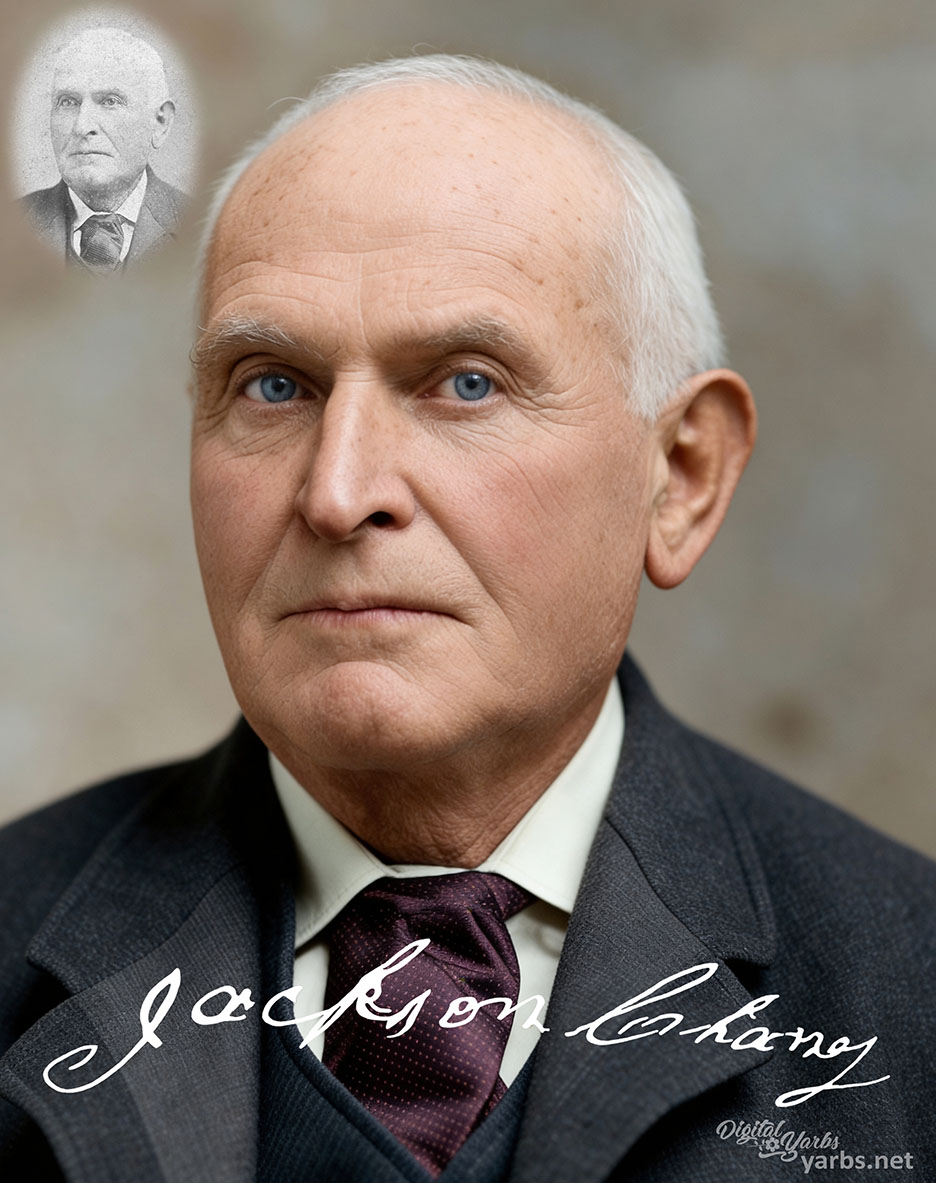
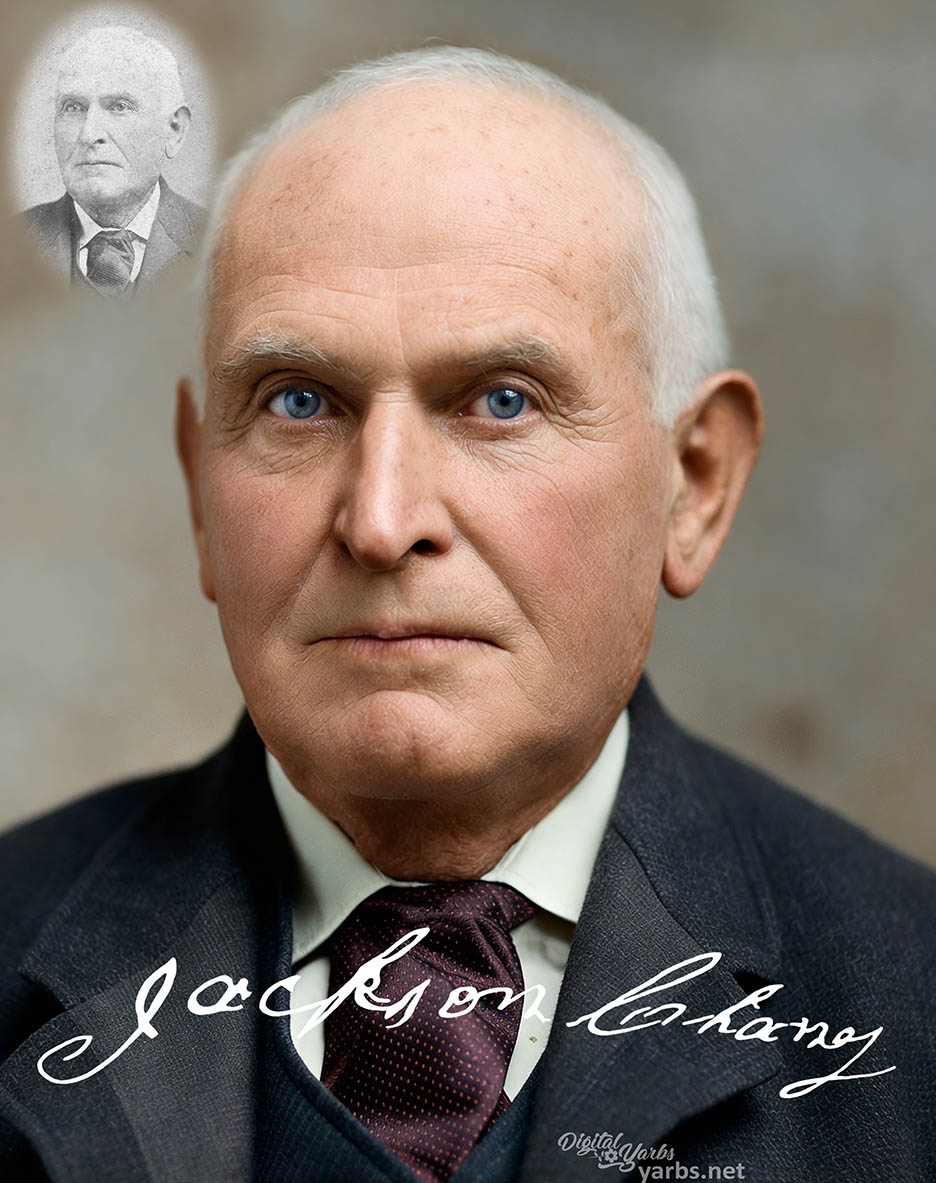
One of the biggest problems with AI restoration and colorization is that it often alters facial features from the original image. This is something anyone using these tools must be extremely careful about. In my experience, AI should never be relied upon by itself. In the case of this photograph of Jackson Chaney, I spent days making manual adjustments in Photoshop to ensure that the facial structure remained faithful to the original photograph.
My process begins by colorizing the original image while preserving the subject's actual features. Once I am satisfied that the colorized version accurately reflects the original photograph, it can be used as a reference for AI-generated angle changes and enhancements.
Even then, AI tends to make too many alterations, especially when changing the angle of a face. The resulting image often no longer resembles the original person. I will give AI credit where it is due, it can create an excellent base image to work from, but that is only the beginning of the process.
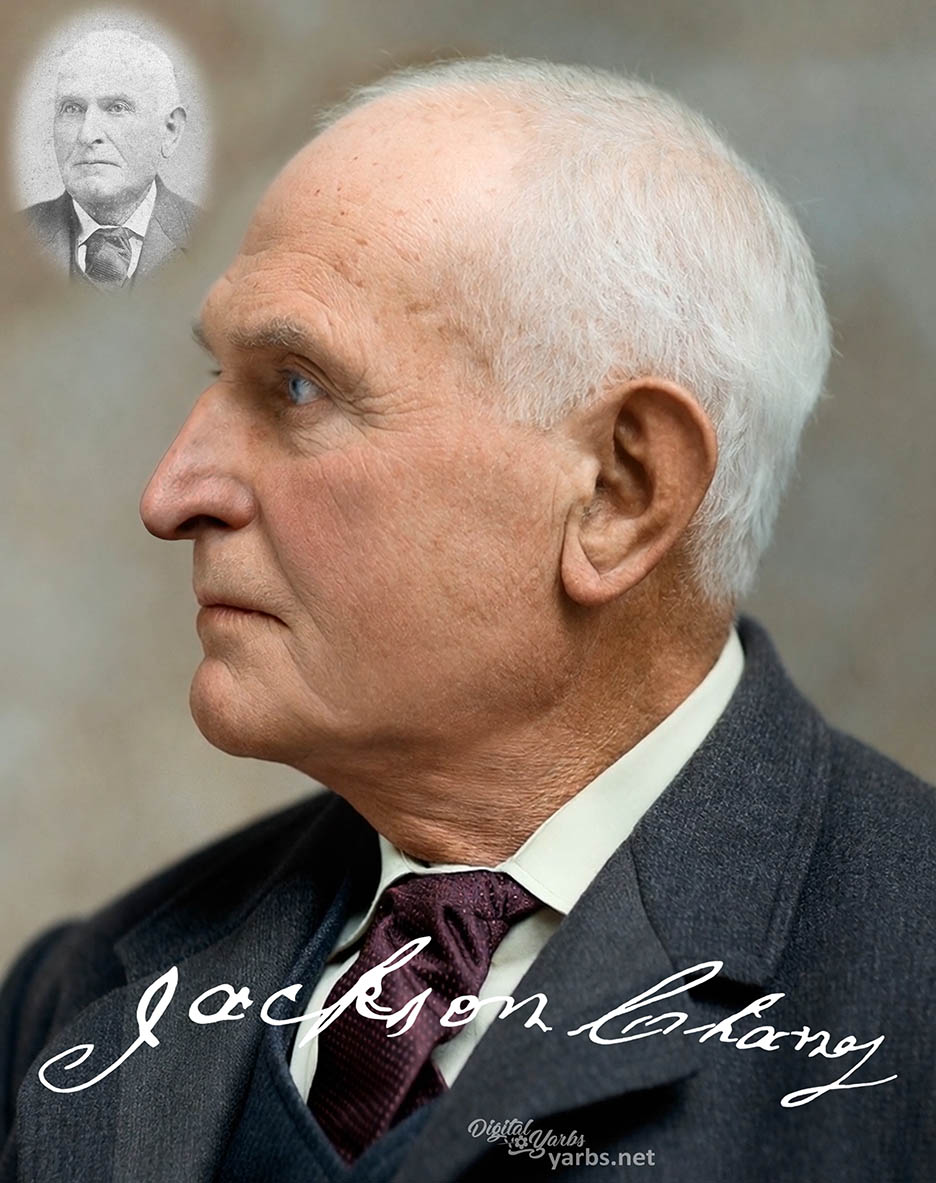
Take the profile view of Chaney as an example. The original photograph does not show the back of his head, and neither can the AI see it. As a result, the AI must estimate what that portion of his head looked like based on the visible facial structure. The program generated roughly 50 to 60 profile views before I found one that closely resembled the man in the photograph. Of all those attempts, only one depicted the slope of the back of his head in a way that I believe is accurate.
How can I make that determination? I examined numerous photographs of Chaney's male descendants, including my grandfather, as well as several cousins and uncles. Many of them shared the same distinctive slope at the back of the head. The AI consistently favored a more rounded head shape, yet I have never observed that characteristic among our Chaney's male descendants. The AI also removed his prominent nasal bone, which I manually restored. Additional corrections were made to the ear, jaw line, and other facial features.
One area where certainty is impossible is the hairline. The original photograph does not clearly reveal where Chaney's hairline began, so both the AI and I had to make educated assumptions. To guide those decisions, I referenced the hairlines of his grandson (my great-great-grandfather), my grandfather, and several other male descendants.
I worked very hard on every image, making countless manual refinements to ensure that both the colorized version and the angle-adjusted reconstructions resemble Jackson Chaney as closely as possible. While AI played a major role in the process, the final images are the result of research, comparison, and hands-on editing rather than automated generation alone.
Image License
This Digital Yarbs image is licensed for non-commercial use under CC BY-NC 4.0 . Attribution is required.
Credit: Digital Yarbs (Cheryl Daniel) — CC BY-NC 4.0 — https://yarbs.net/
Latest Digital Yarbs Video
Click that red subscribe button to stay up to date with my latest content.
Digital Yarbs Complete Works
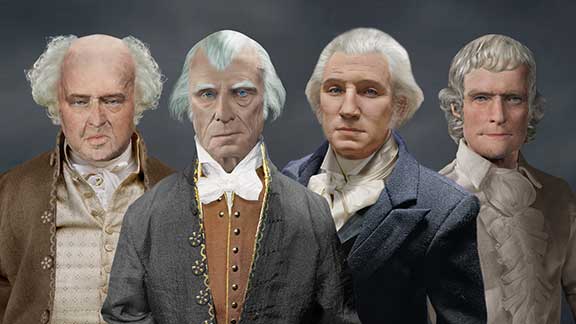
Life Mask Facial Reconstructions of History
Witness the authentic faces of historical figures reconstructed with the remarkable capabilities of Photoshop, utilizing actual plaster life mask castings of their heads and upper torsos.
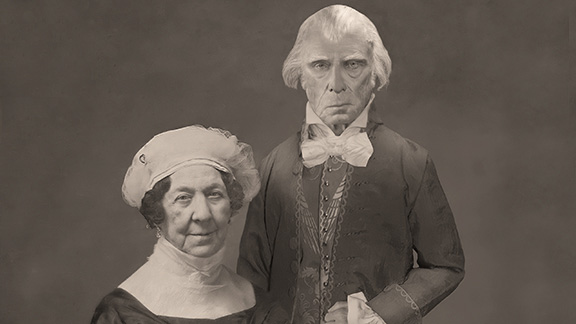
Lost Photographs of History
A captivating collection featuring daguerreotypes, color photographs, and artwork inspired by meticulously reconstructed life masks of prominent figures from American history, including the founding fathers.

Colorizations and Enhancements
Utilizing the powerful tools of Adobe Photoshop and AI, I breathe new life into vintage photographs and daguerreotypes by colorizing, enhancing, de-aging, and occasionally reconstructing them.

Free Image Downloads
Tired of AI-generated historical figures that don’t actually resemble the real people? Free historically accurate images for you to use!