What did Founding Fathers Look Like?
The True Likeness of George Washington
Meet the men
“George Washington (February 22, 1732– December 14, 1799) was an American political leader, military general, statesman, and founding father who served as the first president of the United States from 1789 to 1797. Previously, he led Patriot forces to victory in the nation’s War for Independence. He presided at the Constitutional Convention of 1787, which established the U.S. Constitution and a federal government. Washington has been called the “Father of His Country” for his manifold leadership in the formative days of the new nation.”1
Jean-Antoine Houdon (25 March 1741 – 15 July 1828) was a French neoclassical sculptor. Houdon is famous for his portrait busts and statues of philosophers, inventors and political figures of the Enlightenment. Houdon’s subjects included Denis Diderot (1771), Benjamin Franklin (1778-1809), Jean-Jacques Rousseau (1778), Voltaire (1781), Molière (1781), George Washington (1785–1788), Thomas Jefferson (1789), Louis XVI (1790), Robert Fulton, (1803–04), and Napoléon Bonaparte (1806).2
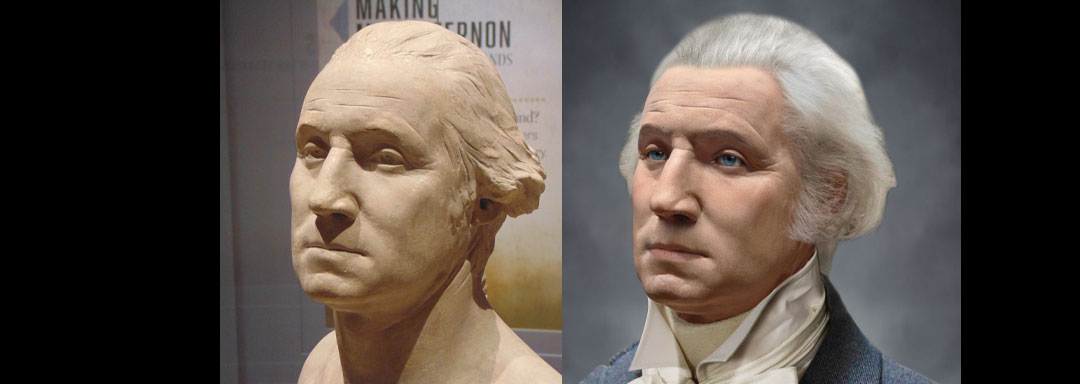
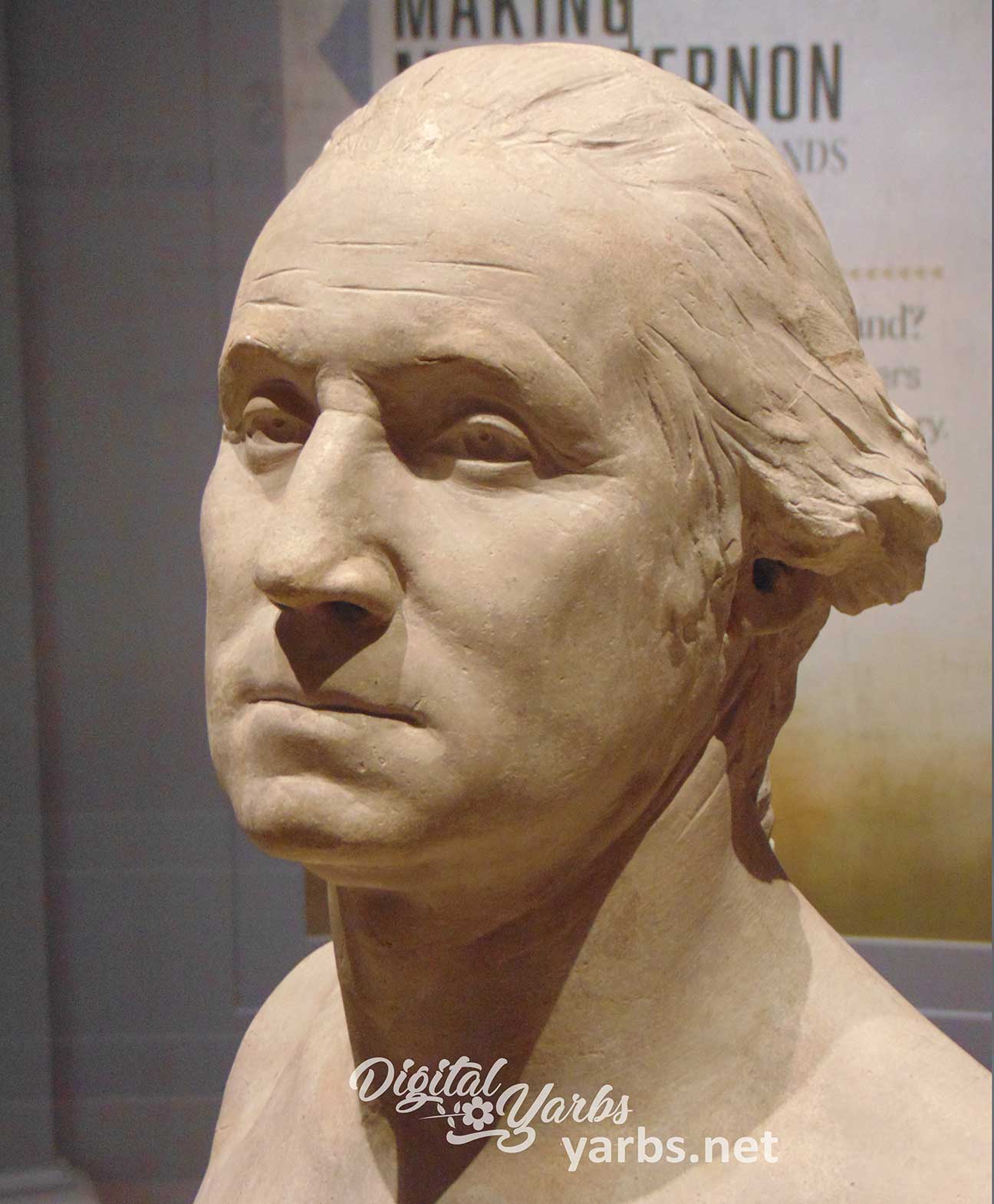
George Washington Life Mask by Jean-Antoine Houdon
According to George Washington’s Mount Vernon, “It took a transatlantic visit and a little flattery to encourage George Washington to sit for Jean-Antoine Houdon, one of the preeminent European sculptors of the 18th century.”3 Washington was not about to travel to Europe to sit for his life mask, nor did he have much time to do so in America. With a little persuasion from Thomas Jefferson and Benjamin Franklin, Washington was convinced to sit for Houdon. “Appealing to Washington’s penchant for fastidious record-keeping, they stressed that it was imperative to document his likeness for posterity.”3
Houdon visited Mount Vernon on October 2, 1785 and stayed with Washington for two weeks.
“During his two-week stay, Houdon followed Washington around, observing his posture and expression. He also took detailed measurements of his body and created the life mask to serve as a model for Washington’s face. He applied grease to Washington’s skin, put quills in his nostrils so he could breathe, and then covered his face with wet plaster. This impression created a mould that, once dried, could itself be filled with plaster to create a positive image of Washington’s face. Because Washington necessarily had his eyes closed, Houdon had to hollow out the pupils of the plaster mask to give the face a life-like expression.”4
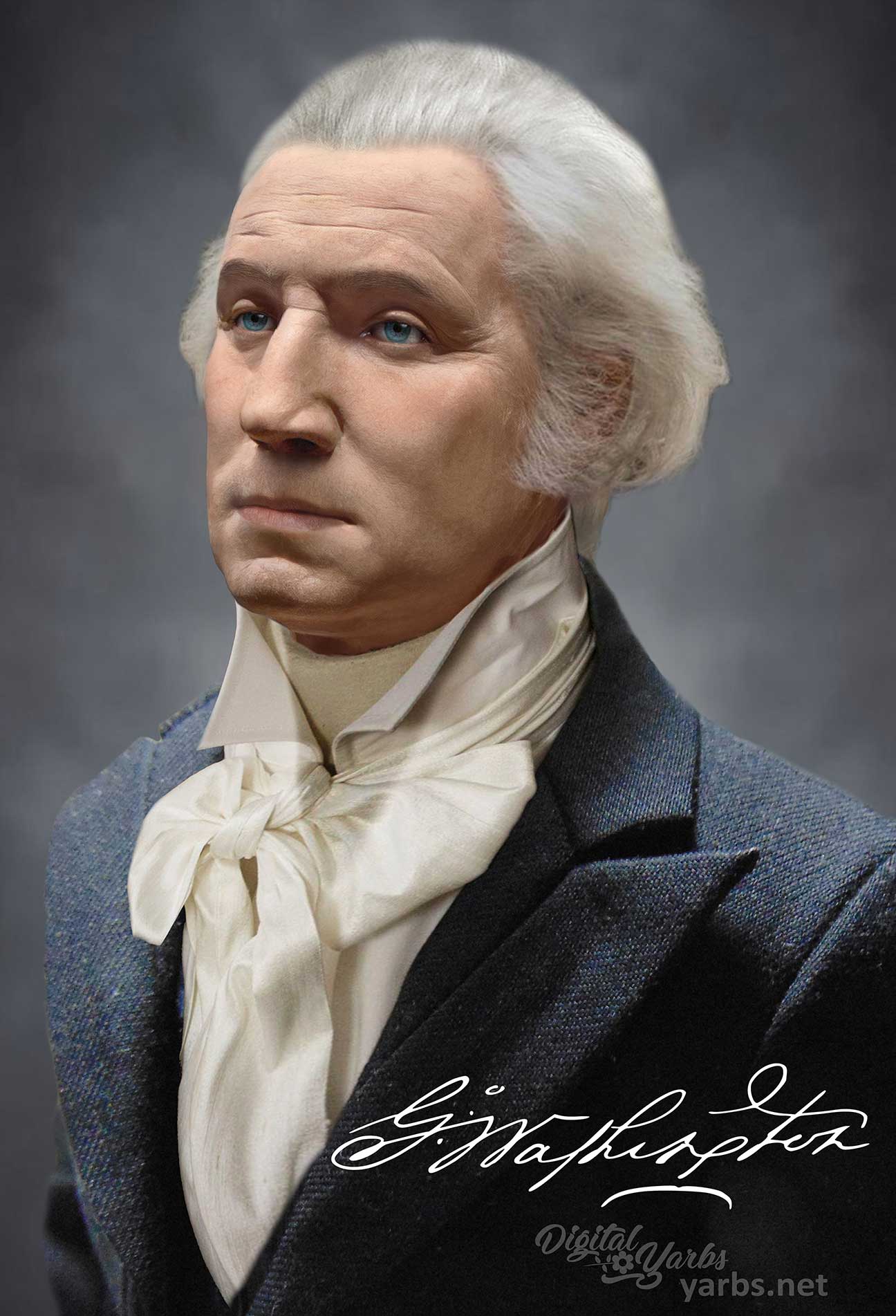
“Washington’s diary entry from October 10, 1785, indicates that he was fascinated by the process, and thoroughly documented the materials and method by which the plaster was prepared that day.”5
“In the servant’s hall adjacent to the Mansion, the General had laid down on a wooden table. His hair was pulled back, covered by a towel, while a large sheet protected his clothes. Oil was generously applied to his face, so that the hardened plaster of the mask would not adhere to his skin. Two large quills were placed inside each of the General’s nostrils to ensure he could breathe.”6
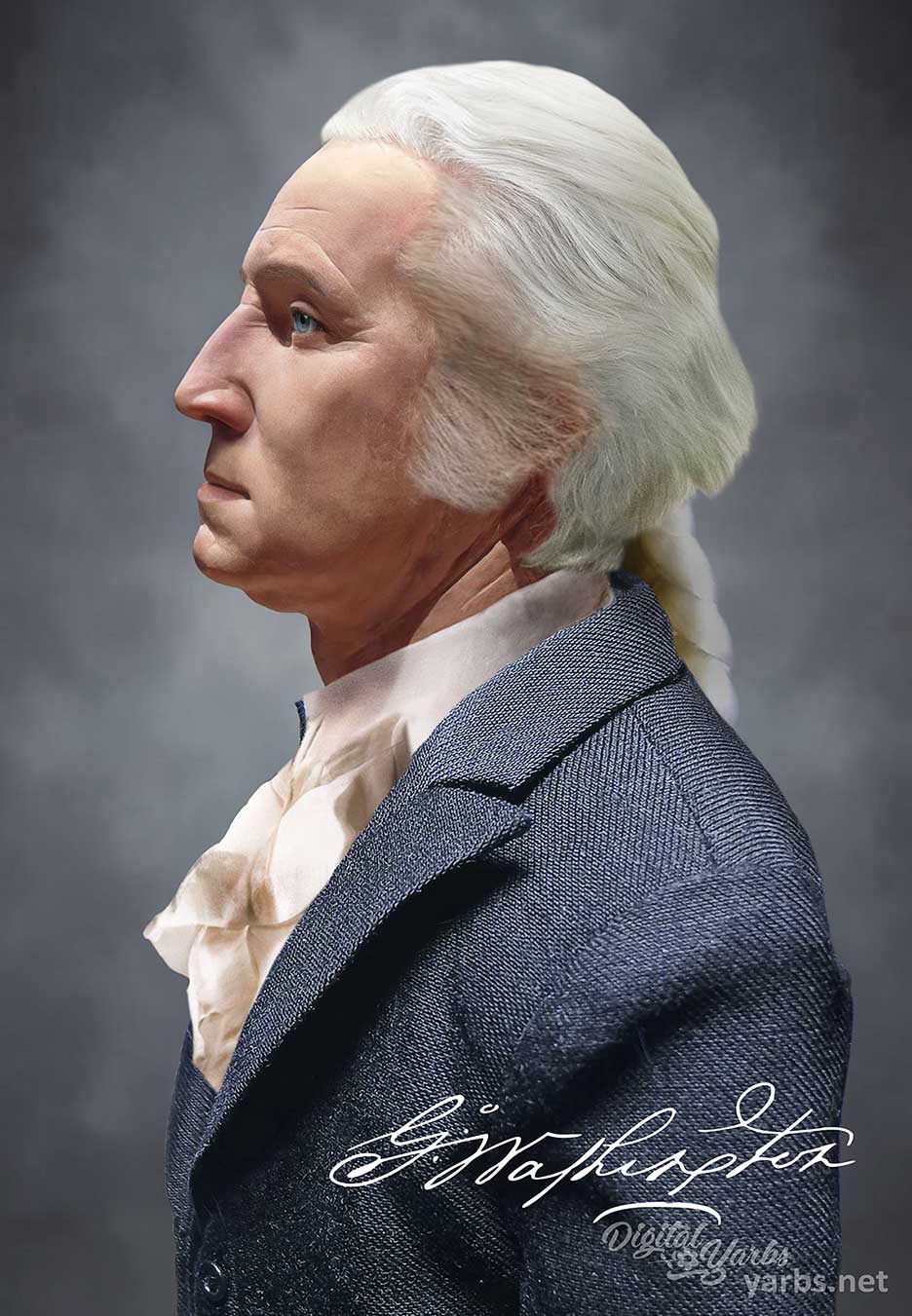
“Houdon took the mask back to Paris with him and used it to create the likeness of a final statue, which was erected in Richmond in 1796. Jefferson, the Marquis de Lafayette, and many of Washington’s relatives praised the statue as the most lifelike representation of Washington that had ever been made. By 1796, General Washington had become President Washington, and was just finishing his second term. He had become, if possible, even more famous than he had been in the 1780s, and Houdon’s statue drew national attention.”7
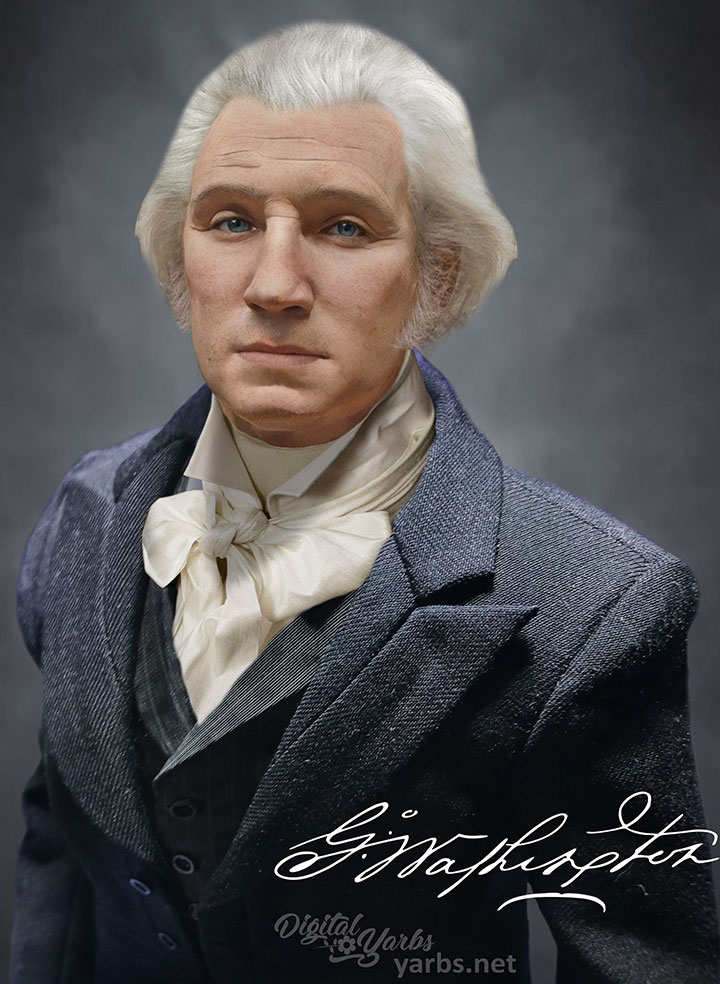
The mask itself was prized as the most authentic likeness of America’s first president. In order to make the positive mask, the mould had to be broken, so only one mask was ever made from the original mould. This mask is now in the collection of the Morgan Library in New York City, most likely purchased by financier and art collector J.P. Morgan on one of his many trips to Europe.”8
George Washington Life Mask De-Aged
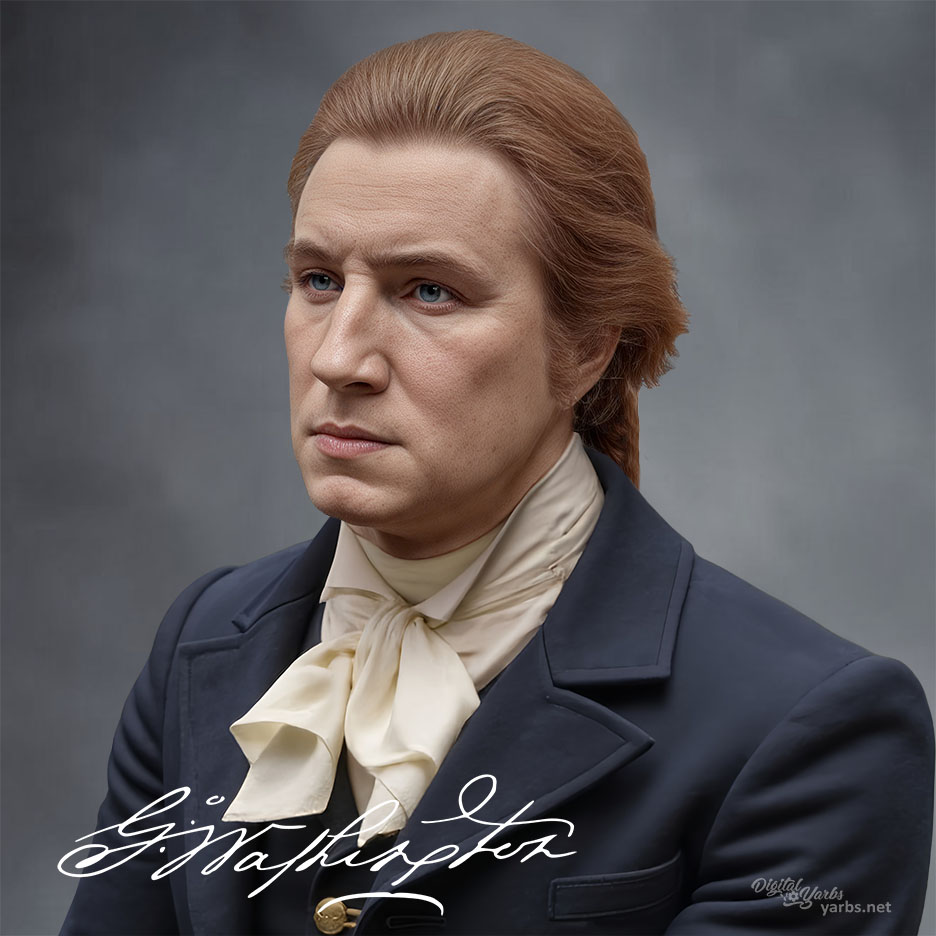
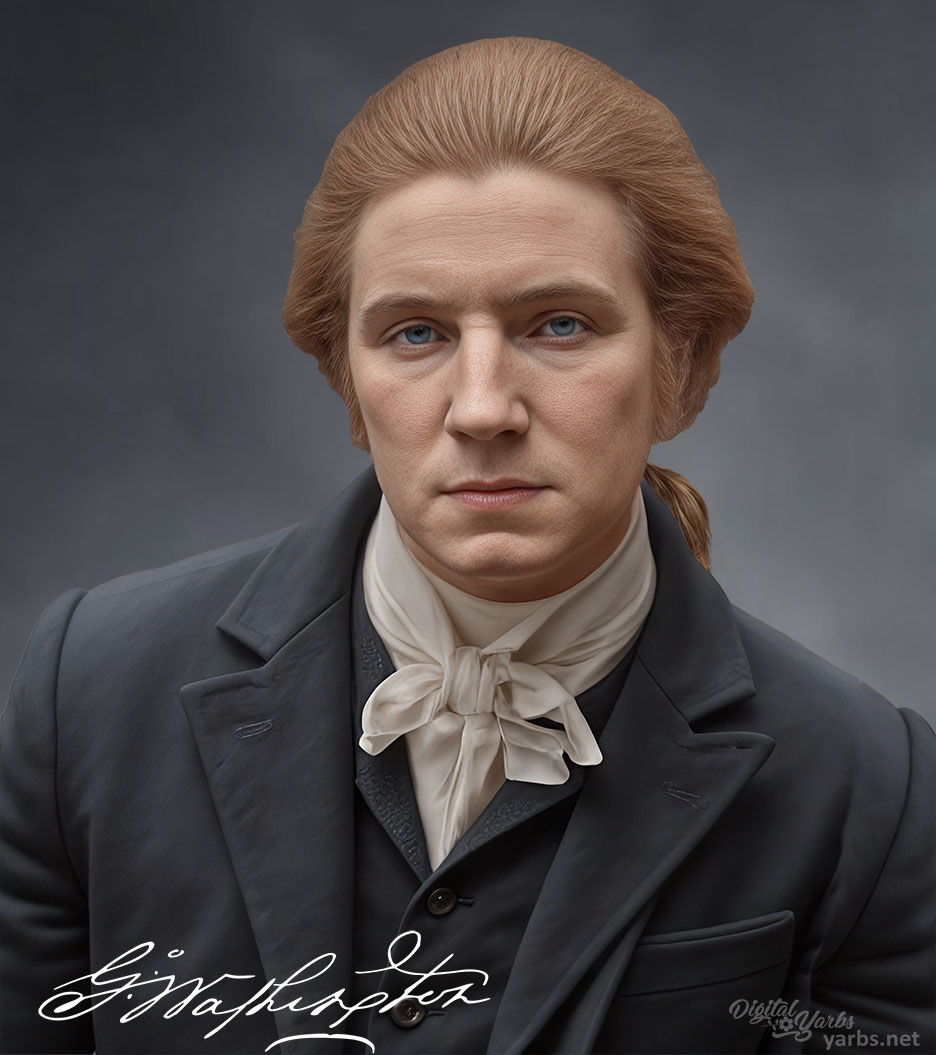
A young George Washington based upon the life mask cast by Jean-Antoine Houdon.
Created with both AI and Photoshop.
The Lost Photograph of George Washington at Mount Vernon
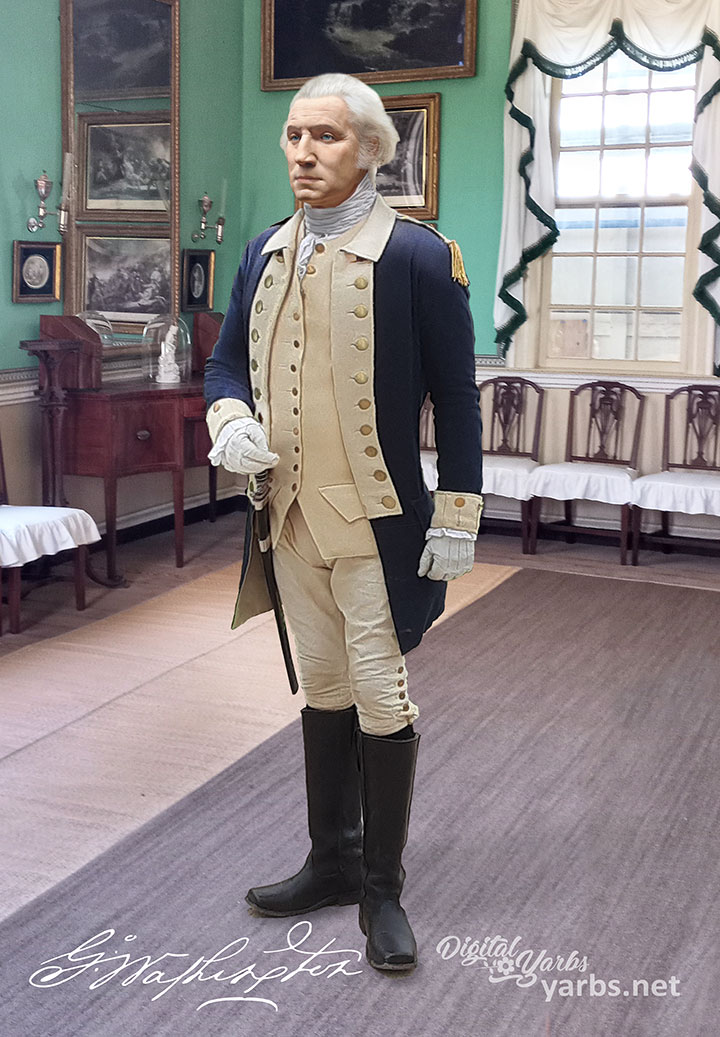
Below is the lost photograph of George Washington. Well, not exactly. There are no photos of George Washington but the composition below of Washington's life mask on a period dress body shows what he might have looked like standing in the New Room at Mount Vernon.
Digital Yarbs Complete Works
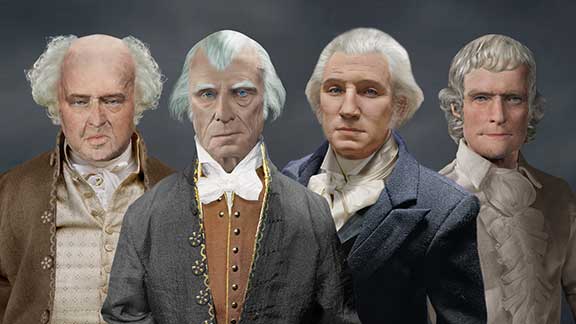
Life Mask Facial Reconstructions of History
Witness the authentic faces of historical figures reconstructed with the remarkable capabilities of Photoshop, utilizing actual plaster life mask castings of their heads and upper torsos.
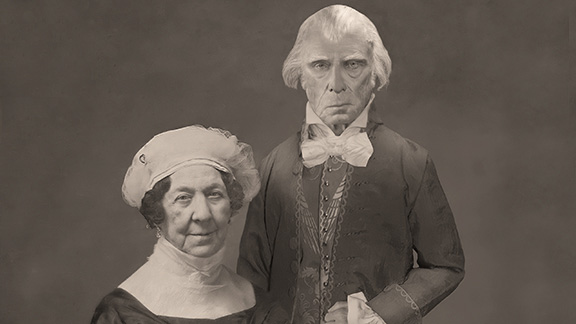
Lost Photographs of History
A captivating collection featuring daguerreotypes, color photographs, and artwork inspired by meticulously reconstructed life masks of prominent figures from American history, including the founding fathers.

Colorizations and Enhancements
Utilizing the powerful tools of Adobe Photoshop and AI, I breathe new life into vintage photographs and daguerreotypes by colorizing, enhancing, de-aging, and occasionally reconstructing them.

Free Image Downloads
Tired of AI-generated historical figures that don’t actually resemble the real people? Free historically accurate images for you to use!
Latest Digital Yarbs Video
Click that red subscribe button to stay up to date with my latest content.